CI pipelines
Concept, implementation, and troubleshooting questions with model answers, evaluation points, follow-ups, and weak-answer warnings.
Open question setExpect precise questions about compile time versus runtime, variable scope, template expansion, conditions, outputs, dependencies, agents, and reusable pipeline design.
Interview focus
Expect precise questions about compile time versus runtime, variable scope, template expansion, conditions, outputs, dependencies, agents, and reusable pipeline design.
Flow diagram
Use this flow to structure design and scenario answers from context through evidence and recovery.
Official Microsoft reference
Use these diagrams beside the original Edukron notes and flows to compare the learning model with the official product and architecture view.
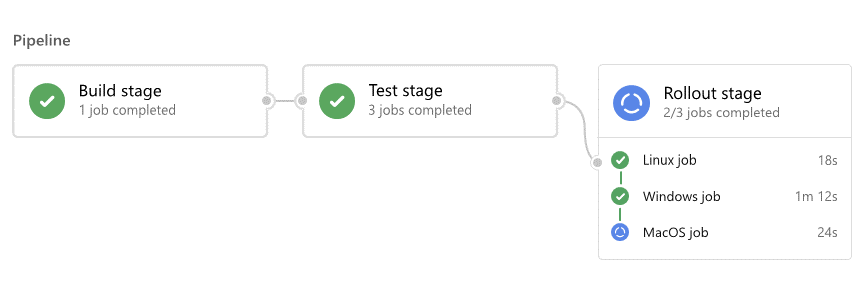
The service processes a run, allocates jobs to agents, and collects step logs, artifacts, test evidence, and the final job result.
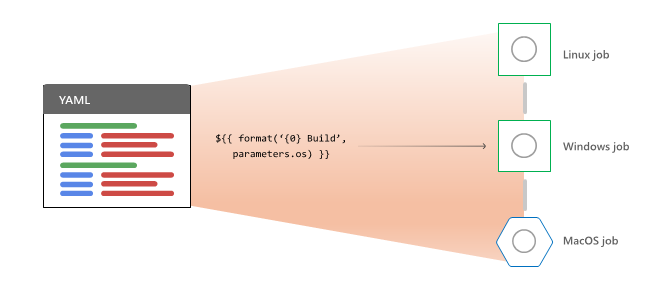
Before jobs run, Azure Pipelines expands templates, resolves compile-time expressions, evaluates stage dependencies, authorizes resources, and creates runtime jobs.
Practical interview scenario
A monolithic YAML pipeline is copied into twenty repositories and uses environment-specific variables inline. Refactor it into governed templates without preventing application teams from configuring safe differences.
Module question spotlight
Define the mechanism and ownership boundary first. Explain that it governs how a request is named, addressed, routed, filtered, transported, protected, and delivered to a healthy endpoint, then contrast it with the adjacent responsibilities represented by the module prerequisites and the following CD pipelines concept. Close with a concrete validation signal.
Start from workload constraints and existing state. Follow the packet from resolution through route, security boundary, transport or TLS session, load distribution, and application response. Include identity, dependencies, normal and failure tests, monitoring, and an explicit recovery decision.
Establish scope and recent change, inspect the native configuration and event or log evidence, test the dependency boundary, apply the smallest reversible mitigation, verify user impact has recovered, and retain the findings for permanent prevention.
Define the mechanism and ownership boundary first. Explain that it governs how a request is named, addressed, routed, filtered, transported, protected, and delivered to a healthy endpoint, then contrast it with the adjacent responsibilities represented by the preceding Classic pipelines concept and the following Pipeline triggers concept. Close with a concrete validation signal.
Start from workload constraints and existing state. Follow the packet from resolution through route, security boundary, transport or TLS session, load distribution, and application response. Include identity, dependencies, normal and failure tests, monitoring, and an explicit recovery decision.
Complete question bank
Concept, implementation, and troubleshooting questions with model answers, evaluation points, follow-ups, and weak-answer warnings.
Open question setConcept, implementation, and troubleshooting questions with model answers, evaluation points, follow-ups, and weak-answer warnings.
Open question setConcept, implementation, and troubleshooting questions with model answers, evaluation points, follow-ups, and weak-answer warnings.
Open question setConcept, implementation, and troubleshooting questions with model answers, evaluation points, follow-ups, and weak-answer warnings.
Open question setConcept, implementation, and troubleshooting questions with model answers, evaluation points, follow-ups, and weak-answer warnings.
Open question setConcept, implementation, and troubleshooting questions with model answers, evaluation points, follow-ups, and weak-answer warnings.
Open question setConcept, implementation, and troubleshooting questions with model answers, evaluation points, follow-ups, and weak-answer warnings.
Open question setConcept, implementation, and troubleshooting questions with model answers, evaluation points, follow-ups, and weak-answer warnings.
Open question setConcept, implementation, and troubleshooting questions with model answers, evaluation points, follow-ups, and weak-answer warnings.
Open question setConcept, implementation, and troubleshooting questions with model answers, evaluation points, follow-ups, and weak-answer warnings.
Open question setConcept, implementation, and troubleshooting questions with model answers, evaluation points, follow-ups, and weak-answer warnings.
Open question setConcept, implementation, and troubleshooting questions with model answers, evaluation points, follow-ups, and weak-answer warnings.
Open question setConcept, implementation, and troubleshooting questions with model answers, evaluation points, follow-ups, and weak-answer warnings.
Open question setConcept, implementation, and troubleshooting questions with model answers, evaluation points, follow-ups, and weak-answer warnings.
Open question setConcept, implementation, and troubleshooting questions with model answers, evaluation points, follow-ups, and weak-answer warnings.
Open question setConcept, implementation, and troubleshooting questions with model answers, evaluation points, follow-ups, and weak-answer warnings.
Open question setConcept, implementation, and troubleshooting questions with model answers, evaluation points, follow-ups, and weak-answer warnings.
Open question setConcept, implementation, and troubleshooting questions with model answers, evaluation points, follow-ups, and weak-answer warnings.
Open question setConcept, implementation, and troubleshooting questions with model answers, evaluation points, follow-ups, and weak-answer warnings.
Open question setConcept, implementation, and troubleshooting questions with model answers, evaluation points, follow-ups, and weak-answer warnings.
Open question setConcept, implementation, and troubleshooting questions with model answers, evaluation points, follow-ups, and weak-answer warnings.
Open question setConcept, implementation, and troubleshooting questions with model answers, evaluation points, follow-ups, and weak-answer warnings.
Open question setConcept, implementation, and troubleshooting questions with model answers, evaluation points, follow-ups, and weak-answer warnings.
Open question setConcept, implementation, and troubleshooting questions with model answers, evaluation points, follow-ups, and weak-answer warnings.
Open question setConcept, implementation, and troubleshooting questions with model answers, evaluation points, follow-ups, and weak-answer warnings.
Open question setConcept, implementation, and troubleshooting questions with model answers, evaluation points, follow-ups, and weak-answer warnings.
Open question setConcept, implementation, and troubleshooting questions with model answers, evaluation points, follow-ups, and weak-answer warnings.
Open question set