Organizations
Concept, implementation, and troubleshooting questions with model answers, evaluation points, follow-ups, and weak-answer warnings.
Open question setInterview answers should connect planning hierarchy, team topology, permissions, service connections, agents, and end-to-end traceability rather than discussing Boards in isolation.
Interview focus
Interview answers should connect planning hierarchy, team topology, permissions, service connections, agents, and end-to-end traceability rather than discussing Boards in isolation.
Flow diagram
Use this flow to structure design and scenario answers from context through evidence and recovery.
Official Microsoft reference
Use these diagrams beside the original Edukron notes and flows to compare the learning model with the official product and architecture view.
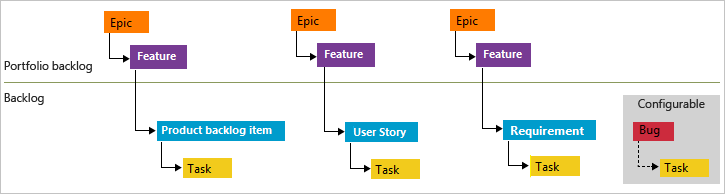
Azure Boards uses portfolio, requirement, and task categories differently across Agile, Scrum, and CMMI processes; the hierarchy should support planning without deep same-category nesting.
Practical interview scenario
A program has five teams, shared platform work, inconsistent backlog states, and no link between changes and requirements. Design the Azure DevOps project, teams, work-item model, and reporting approach.
Module question spotlight
Define the mechanism and ownership boundary first. Explain that it provides a concrete platform capability that must be configured, secured, validated, observed, and owned throughout its lifecycle, then contrast it with the adjacent responsibilities represented by the module prerequisites and the following Projects concept. Close with a concrete validation signal.
Start from workload constraints and existing state. State the requirement, configure the smallest working unit, connect its dependencies, test success and failure, and document operational ownership. Include identity, dependencies, normal and failure tests, monitoring, and an explicit recovery decision.
Establish scope and recent change, inspect the native configuration and event or log evidence, test the dependency boundary, apply the smallest reversible mitigation, verify user impact has recovered, and retain the findings for permanent prevention.
Define the mechanism and ownership boundary first. Explain that it provides a concrete platform capability that must be configured, secured, validated, observed, and owned throughout its lifecycle, then contrast it with the adjacent responsibilities represented by the preceding Teams concept and the following Permissions concept. Close with a concrete validation signal.
Start from workload constraints and existing state. Identify the actor, authentication method, permission scope, protected resource, expiry or rotation behavior, and audit event. Include identity, dependencies, normal and failure tests, monitoring, and an explicit recovery decision.
Complete question bank
Concept, implementation, and troubleshooting questions with model answers, evaluation points, follow-ups, and weak-answer warnings.
Open question setConcept, implementation, and troubleshooting questions with model answers, evaluation points, follow-ups, and weak-answer warnings.
Open question setConcept, implementation, and troubleshooting questions with model answers, evaluation points, follow-ups, and weak-answer warnings.
Open question setConcept, implementation, and troubleshooting questions with model answers, evaluation points, follow-ups, and weak-answer warnings.
Open question setConcept, implementation, and troubleshooting questions with model answers, evaluation points, follow-ups, and weak-answer warnings.
Open question setConcept, implementation, and troubleshooting questions with model answers, evaluation points, follow-ups, and weak-answer warnings.
Open question setConcept, implementation, and troubleshooting questions with model answers, evaluation points, follow-ups, and weak-answer warnings.
Open question setConcept, implementation, and troubleshooting questions with model answers, evaluation points, follow-ups, and weak-answer warnings.
Open question setConcept, implementation, and troubleshooting questions with model answers, evaluation points, follow-ups, and weak-answer warnings.
Open question setConcept, implementation, and troubleshooting questions with model answers, evaluation points, follow-ups, and weak-answer warnings.
Open question setConcept, implementation, and troubleshooting questions with model answers, evaluation points, follow-ups, and weak-answer warnings.
Open question setConcept, implementation, and troubleshooting questions with model answers, evaluation points, follow-ups, and weak-answer warnings.
Open question setConcept, implementation, and troubleshooting questions with model answers, evaluation points, follow-ups, and weak-answer warnings.
Open question setConcept, implementation, and troubleshooting questions with model answers, evaluation points, follow-ups, and weak-answer warnings.
Open question setConcept, implementation, and troubleshooting questions with model answers, evaluation points, follow-ups, and weak-answer warnings.
Open question setConcept, implementation, and troubleshooting questions with model answers, evaluation points, follow-ups, and weak-answer warnings.
Open question setConcept, implementation, and troubleshooting questions with model answers, evaluation points, follow-ups, and weak-answer warnings.
Open question setConcept, implementation, and troubleshooting questions with model answers, evaluation points, follow-ups, and weak-answer warnings.
Open question setConcept, implementation, and troubleshooting questions with model answers, evaluation points, follow-ups, and weak-answer warnings.
Open question setConcept, implementation, and troubleshooting questions with model answers, evaluation points, follow-ups, and weak-answer warnings.
Open question setConcept, implementation, and troubleshooting questions with model answers, evaluation points, follow-ups, and weak-answer warnings.
Open question setConcept, implementation, and troubleshooting questions with model answers, evaluation points, follow-ups, and weak-answer warnings.
Open question set